
Cost of a built-in wardrobe: what you need to know
I build built-in wardrobes that turn unused space into storage that feels like part of the room. Price depends on size, layout, materials, finish, interior fittings, and how much customization the installation needs. A straight wardrobe on an even wall goes faster than a solution under a sloped ceiling or around uneven walls and pipes. To give you an accurate price, I need to see the space and understand what you need it to hold.
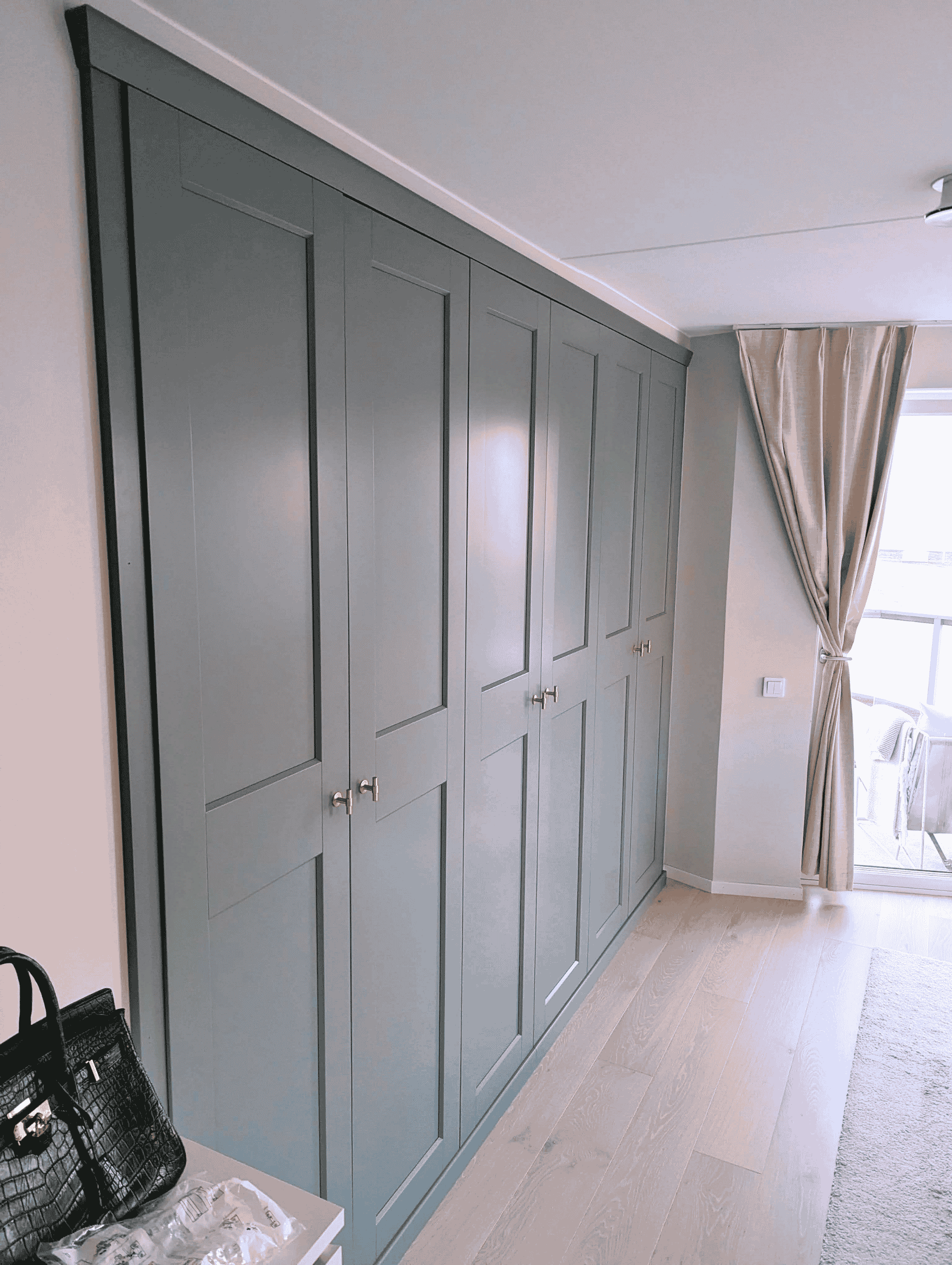
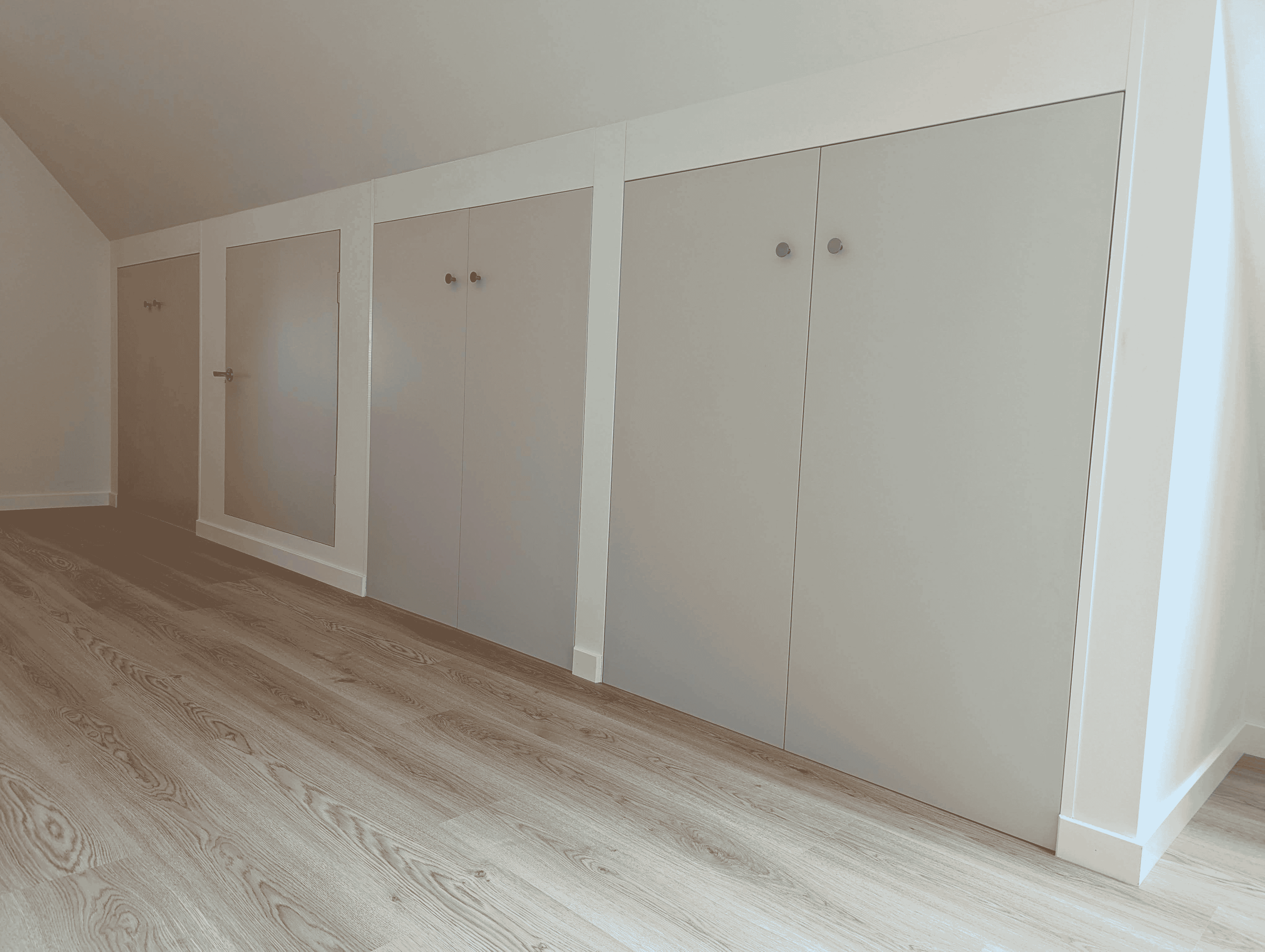
Where does a built-in wardrobe make the biggest difference?
Mostly where standard furniture leaves gaps or wastes the room's height. In the bedroom, clothes, shoes, and accessories sit behind clean, uniform fronts. In the hallway, jackets, bags, and shoes get a proper place while the wall's full height gets used, which makes a tight entryway much easier to keep tidy. I build the interior around how you actually live: extra hanging space, double rails, drawers exactly where you need them. A sloped ceiling can become practical cabinets, drawers, or shelves. Often that's where a custom solution makes the biggest difference of all.
What drives the cost?
Size, room conditions, interior fittings, doors, drawers, and surface finish matter most. Materials usually aren't the biggest cost, unless you want real wood. Plain doors are quickest to produce; framed, routed, or handleless fronts take longer. Niches, uneven floors, corners, and sloped ceilings all need careful measuring before I can quote. Labor is a major part of the cost too. Most jobs need two people working one to two days, depending on size. As a private customer, you can typically claim ROT-avdrag on the labor portion, which lowers your net price.
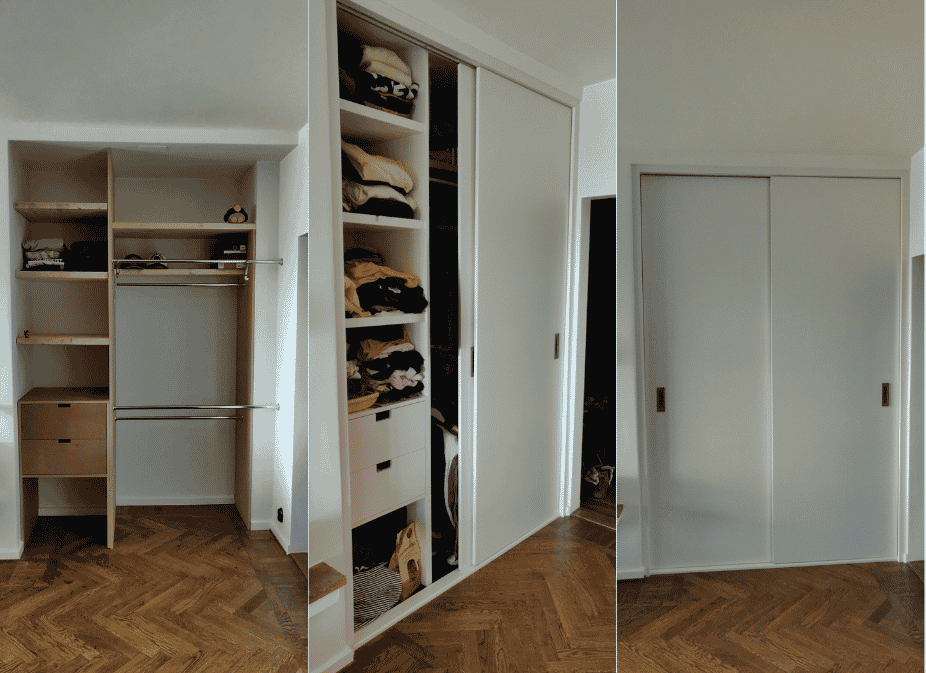
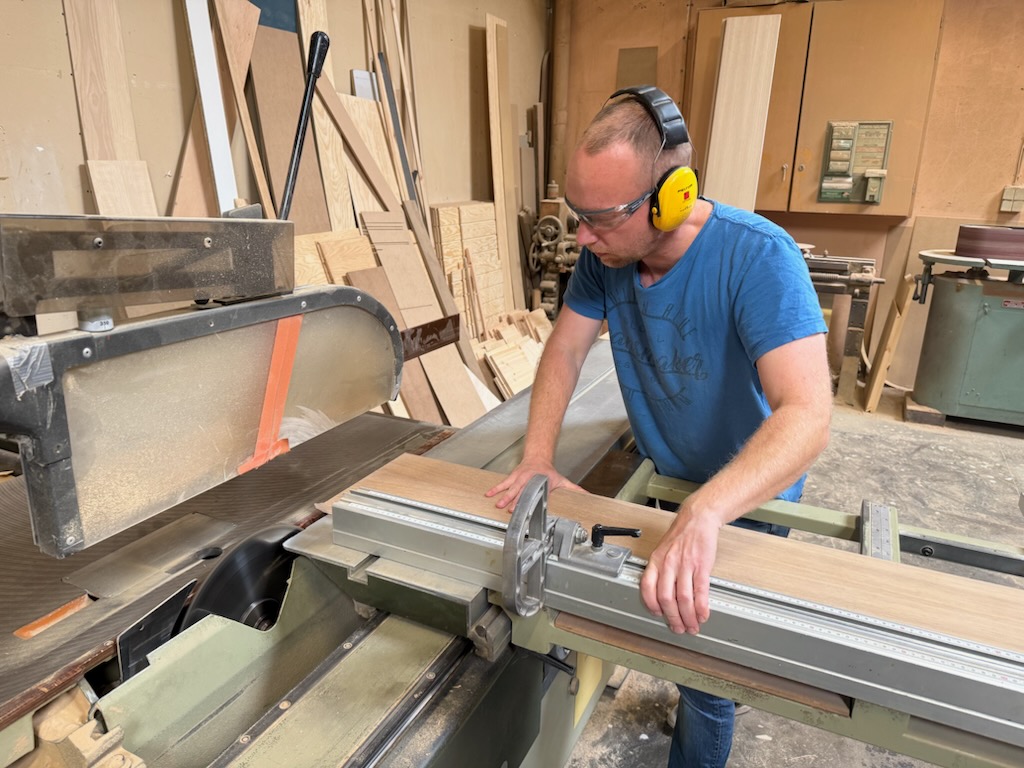
Materials and Finish
MDF gives a smooth, stable surface for painting and detailed joinery. Spray-painted MDF, done properly, gives an even, furniture-grade finish. If you want something warmer, I can veneer in oak, ash, or pine. Always compare samples in the actual room. Daylight, lighting, wall color, and flooring all change how a material reads.
Before requesting a quote: measure ceiling height and wall width, and note radiators, sockets, skirting boards, and any unevenness. Decide what the wardrobe needs to hold. Make sure the quote covers materials, surface finish, interior fittings, ROT-eligible labor, delivery, and installation. A good built-in wardrobe isn't just furniture. It's a solution that fits the room and the way you actually live in it.
Schedule a free consultation
Do you have an idea or a project you’re thinking about? A quick chat is often the best way to start. We’ll go over your ideas and see if it’s the right project for me.

Custom-built furniture and fine woodworking, made in Malmö.
Operating in Malmö, Limhamn, and Vellinge
We work with both private individuals and interior designers


